The Patina and Plexi Seiko 6105 Gasket Protocol: 2026 Water Resistance Guide
The Patina and Plexi Seiko 6105 Gasket Protocol: 2026 Water Resistance Guide
The Patina and Plexi Seiko 6105 Gasket Protocol: 2026 Water Resistance Guide
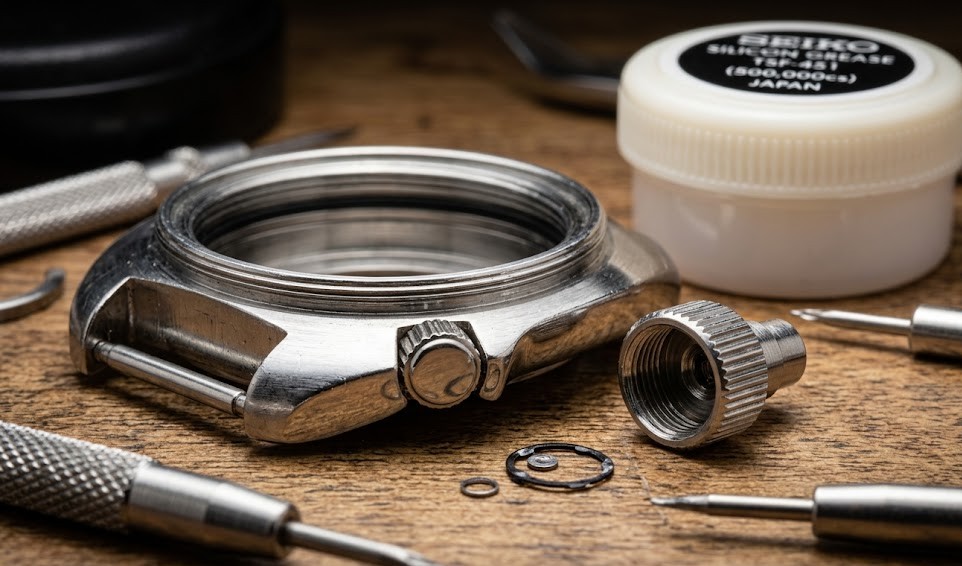
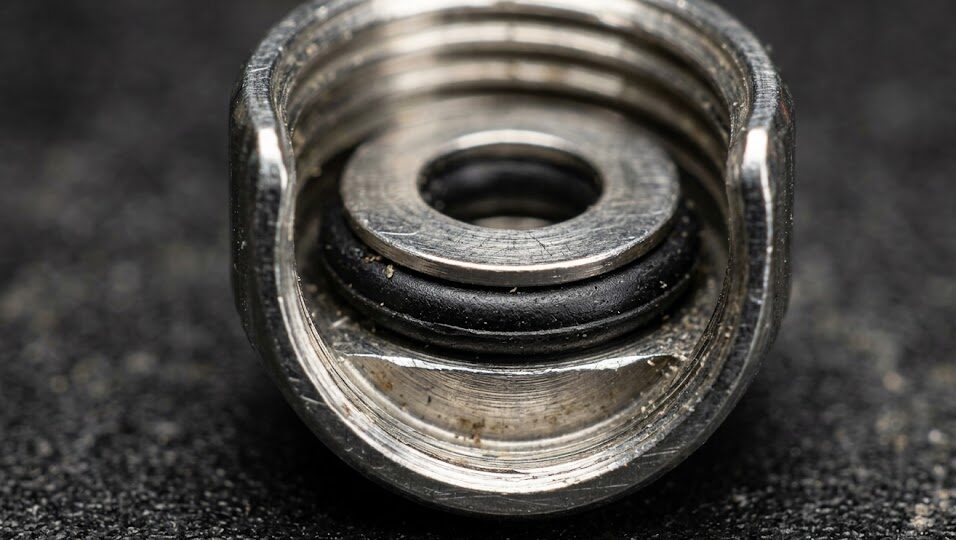
A vintage Seiko 6105-8110 Captain Willard diver disassembled for a crown gasket replacement and TSF-451 silicone grease application reveals a major flaw in 1970s service philosophy. Unlike modern divers, the rubber O-ring inside the 6105 crown is trapped behind a permanently fixed metal washer. Seiko’s original intent was for watchmakers to simply replace the entire crown assembly during routine servicing—a luxury we no longer have in 2026, as original NOS (New Old Stock) crowns are virtually extinct, heavily aged, and prone to immediate failure upon installation.
Technical Specifications: The Patina and Plexi Seal Evaluation
- Primary Entity
- Seiko 6105-8110 / 6105-8000
- Required Lubricant
- Seiko TSF-451 Silicone Grease (Industry Standard)
- Caseback Gasket Code
- OC3060B (Substitute NBR Rubber)
- Crown Architecture
- Turn-and-Lock Captive Washer System (Non-Screwdown)
The Captive Washer Bypass Protocol
To access the hardened, 50-year-old rubber inside the 6105 crown without destroying the steel housing, master watchmakers use a “gasket stuffing” technique. By forcing successive layers of sacrificial rubber O-rings over a spare case tube and pressing the crown down, the internal hydrostatic pressure gradually domes the retaining washer outward until it pops free. Once the old rubber is excavated, the new nitrile (NBR) gasket must be thoroughly saturated in Seiko TSF-451 silicone grease. Standard mechanical greases will cause the NBR to swell and rot; TSF-451 is chemically inert and specifically formulated to repel water while maintaining the gasket’s elasticity.
Micro-Utility: Vintage Seiko Pressure Test Estimator
Assess the viability of pressure-testing your vintage diver based on its current component status:
Dealbreakers: Who Should NOT Dive with a Vintage Seiko?
Even if you successfully rebuild the captive crown and pass a dry pressure test, we strongly advise against swimming with a 6105 in 2026 for the following reasons:
- The Unpredictability of Micro-Pitting: Stainless steel from the 1970s is highly susceptible to crevice corrosion. A microscopic rust channel hidden beneath the caseback threads can compromise a brand-new OC3060B gasket the moment the watch hits cold water.
- Movement Irreplaceability: If salt water bypasses the crown seal, it will instantly destroy the date-wheel mechanism and hacking lever. Sourcing an uncorroded 6105B movement to replace it will easily cost £400+ in parts alone.
If you demand a highly capable, water-ready tool watch that carries the same vintage DNA without the liability, refer to our Seiko SPB143 heritage diver evaluation for a modern, warranty-backed alternative.
2026 Market Access: Securing Gaskets & Tools
When sourcing supplies to perform this protocol, always search for genuine Seiko TSF-451 grease and NBR gaskets on eBay. Never buy generic, pre-lubricated “watchmaker’s assortments,” as the cheap petroleum-based oils used in those kits will actively degrade your newly installed seals.
To access our complete library of technical teardowns and proprietary pressure testing frameworks, search Google for Patina and Plexi Seiko Checklists.
<p>The post The Patina and Plexi Seiko 6105 Gasket Protocol: 2026 Water Resistance Guide first appeared on Patina & Plexi.</p>
This article was originally published on Patina & Plexi. Read the full guide and explore our vintage collection there.


Comments
Post a Comment